Bellz Theorem, 7: Daisy
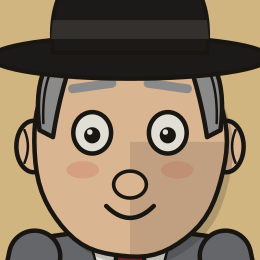
How it gets told: an IBM 7094 sang Daisy Bell in 1961. On record, the 7094 came out in 1962, and the story fuses two events. In May 1961 a Labs computer sang the song for an audience in Philadelphia, as the papers reported. The famous recording is John L. Kelly Jr. and Carol Lochbaum's voice, a program that shaped sound like a throat, a row of short tubes, with Max Mathews's piano added later; it sang with Russian vowels, its throat shapes taken from X-rays of Russian speakers. They picked a song from 1892. For years it was part of the tour of the Labs, and in the early 1960s Arthur C. Clarke heard it there; in 1968 a film's dying computer sang the same old song. Labelled liberties: Dot, Gus and Mr. Pruitt are made up, and so are the night and the visitors. It made its song on tape, voice first and piano later; the film shows it singing live. Its name, Daisy, and its song were made for the show: it sang an 1892 song, not this one. Kelly and Mathews are house-style puppets, not likenesses, and silent. Song: Daisy, made for the show.
True story Every fact on screen was checked before release (2026-11-11). The dialogue is invented.
Cast






 8
Sources
- Library of Congress, National Recording Registry essay: Daisy Bell (Bicycle Built for Two), Cary O'Dell
- Max Mathews interview, 2011 (the tube model, the Russian vowels, voice first and piano later)
- Kelly and Gerstman, An Artificial Talker Driven from a Phonetic Input, JASA 33, 835 (1961)
- A. Michael Noll, Women in Programming and Computer Art at Bell Labs (Carol Lochbaum)
- Stanford CCRMA: the Kelly-Lochbaum vocal tract
- IBM 7094 (announced January 1962)